
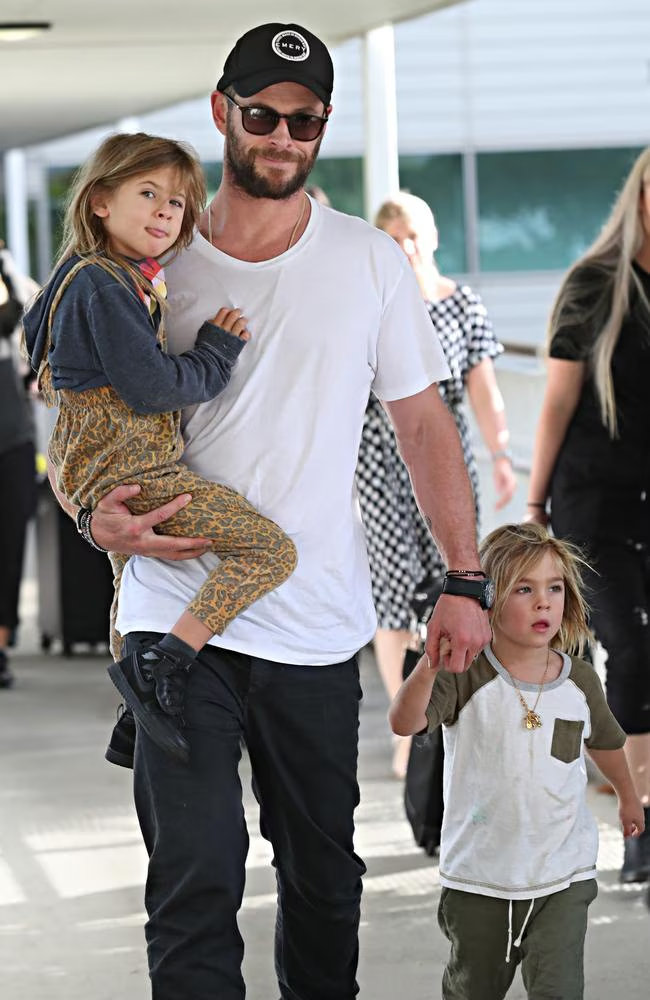
Liam Hemsworth children news occupies uncertain territory in celebrity reporting, where confirmation and speculation operate in distinctly different information ecosystems. Reports have circulated regarding family expansion, yet official statements remain notably absent from the actor’s public communications. This gap between rumor and verification reveals critical dynamics about how celebrity family news circulates in fragmented media environments.
The practical challenge here is distinguishing between documented fact and algorithmic content generation. From a business perspective, this ambiguity creates risk for both reputation management and audience trust in information sources.
Confirmation Gaps and Why Official Sources Matter
The absence of verified confirmation from primary sources creates an information vacuum that secondary content rapidly fills. When celebrity representatives don’t issue statements, audiences rely on indirect signals—social media analysis, paparazzi photographs, and insider reports of varying credibility.
What I’ve learned is that confirmation gaps don’t stop narrative formation; they simply shift it to less reliable channels. The bottom line is that verified information and speculative content compete in the same attention economy, often with speculative material achieving wider distribution due to its emotional appeal.
This dynamic explains why Liam Hemsworth children news continues generating searches despite unclear factual foundation. The market rewards coverage volume over verification rigor, creating systemic incentives for content production regardless of source quality. From a practical standpoint, this makes audience media literacy essential but increasingly difficult to maintain.
Relationship Timeline and The Context That Shapes Speculation
Understanding the actor’s relationship history provides framework for how family speculation emerges and evolves. Following a high-profile marriage and subsequent divorce, new relationship developments naturally generate heightened attention around potential life milestones.
His relationship with Gabriella Brooks has been documented since the late 2010s, creating sufficient timeline for audiences to anticipate traditional progressions. Here’s what actually happens: public relationship visibility sets expectation clocks that audiences monitor for standard milestones, regardless of the couple’s actual intentions or timeline.
The reality is that relationship length becomes a data point that feeds speculation algorithms. Media outlets track duration and interpret stability as precursor to family expansion, creating narrative momentum that exists independently of confirmed plans. I’ve seen this play out repeatedly—the longer a relationship continues, the more intense the speculation becomes, treating time itself as predictive signal.
Privacy Strategy and How Silence Functions as Response
The notably private approach both the actor and his partner maintain regarding personal life demonstrates deliberate boundary management. Unlike some celebrities who strategically share selective personal updates, this couple’s approach involves minimal voluntary disclosure about relationship details or future plans.
What actually works in privacy maintenance is consistency. By establishing a pattern of non-disclosure, expectations gradually calibrate to lower information availability. The data tells us that while curiosity persists, the intensity of speculation can be managed through sustained privacy practice rather than periodic statements.
Look, the bottom line is that privacy in high-visibility careers requires treating personal information as strategically controlled rather than publicly available by default. This approach accepts ongoing curiosity as permanent baseline while refusing to participate in feeding speculation cycles through response or denial.
Information Quality and The Challenge of Source Assessment
The varying reliability of reports about Liam Hemsworth children news highlights a critical challenge in contemporary media consumption. Some sources present speculative content using definitive language, while verified outlets explicitly note when information lacks official confirmation.
From a practical standpoint, this creates risk for both audiences and the subjects of coverage. Misinformation doesn’t require malicious intent—it emerges naturally from content production systems optimized for volume and engagement rather than verification rigor. Here’s what I’ve learned: the burden of verification increasingly falls on consumers rather than publishers, particularly in personality-driven content categories.
The market dynamics reward speed and speculation over accuracy and restraint. This means unverified reports often achieve broader distribution than corrections or clarifications, creating lasting impressions that persist even after being disputed. The reality is that in attention-based media economics, being first matters more than being right.
Family Privacy and The Business Case for Boundary Control
The approach to managing Liam Hemsworth children news reflects broader calculations about career sustainability and personal wellbeing. High-profile careers create tension between public interest and private autonomy, requiring ongoing decisions about what aspects of life become marketable content versus protected territory.
What I’ve seen repeatedly is that early boundary-setting establishes precedent that becomes increasingly difficult to reverse. Once certain information categories become public domain, attempting to reclaim privacy in those areas faces resistance from audiences who’ve come to expect access. From a strategic standpoint, this makes initial privacy decisions disproportionately important.
The 80/20 rule applies powerfully here: protecting twenty percent of life details as genuinely private creates eighty percent of sustainable boundary structure. The economic reality is that complete privacy is incompatible with high-visibility careers, but strategic privacy around specific life domains remains achievable through consistent practice. This requires treating personal information as business asset subject to strategic decision-making rather than automatic public disclosure.